
MilitaryArmor
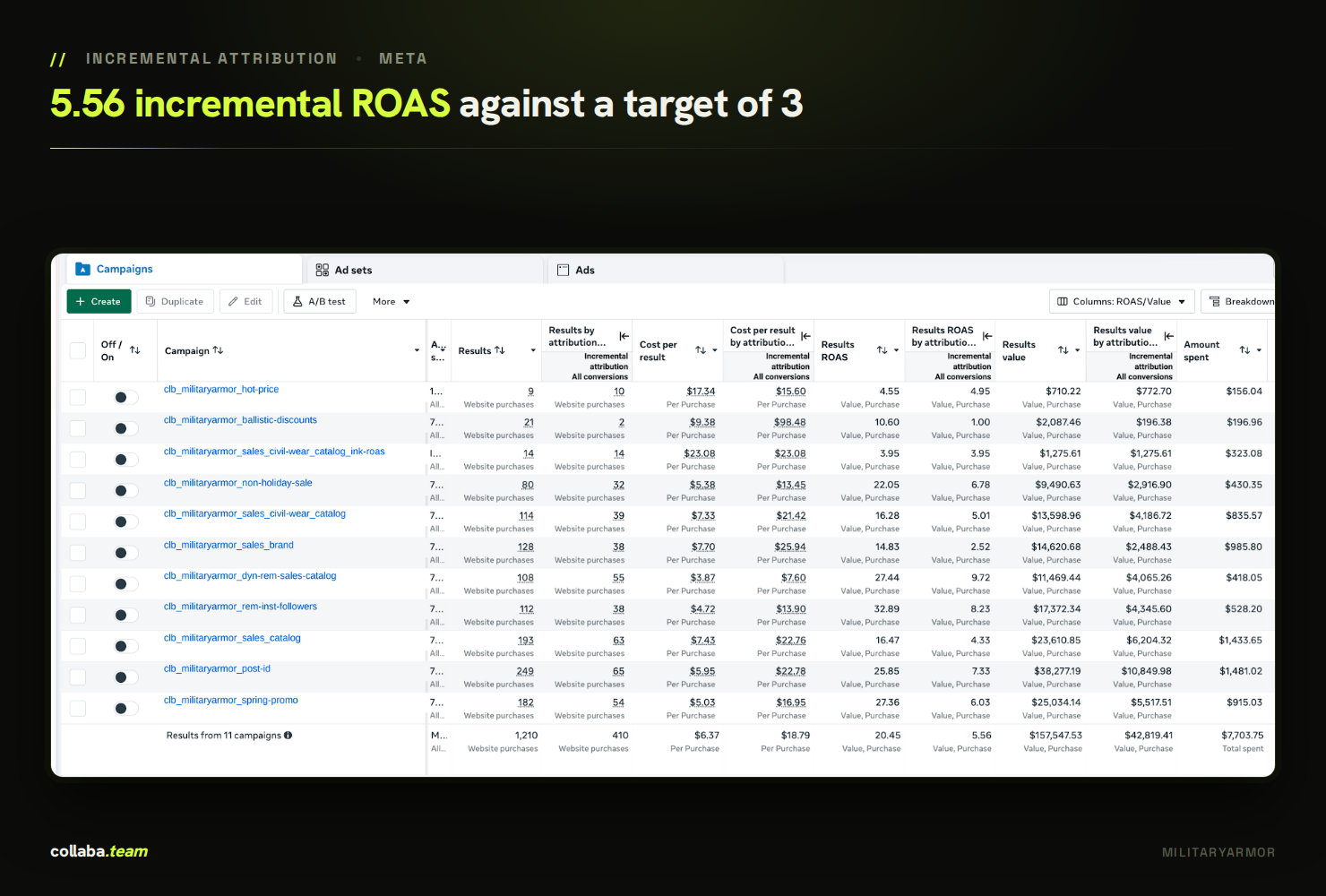
MilitaryArmor sells protective equipment to military and law-enforcement buyers and tactical clothing to civilians. We took over with an empty ad account and in four months reached 5.56 incremental ROAS against a client target of 3, by splitting the catalog into campaigns that match how the store actually sells and letting incremental lift, not in-platform numbers, decide where the budget went.
NICHE
Military & tactical gear e-commerce
CHANNEL
Meta Ads
TIMELINE
4 months
SERVICE
Meta Ads strategy, setup and full-cycle management
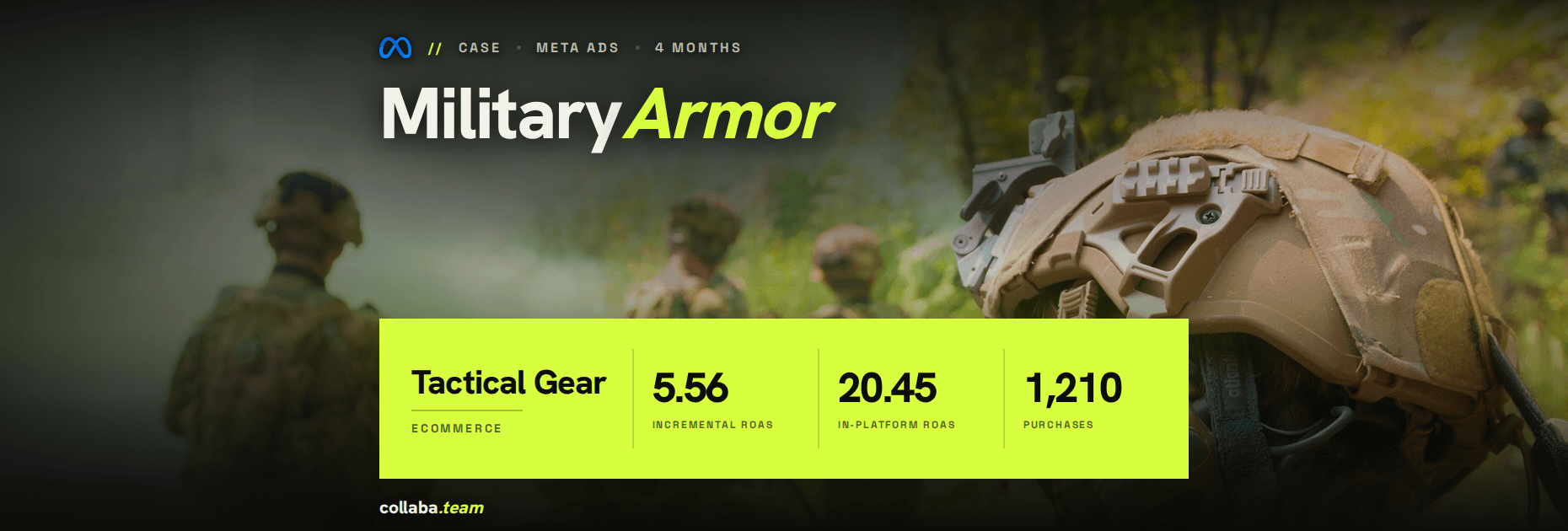
5.56
incremental ROAS
20.45
in-platform ROAS
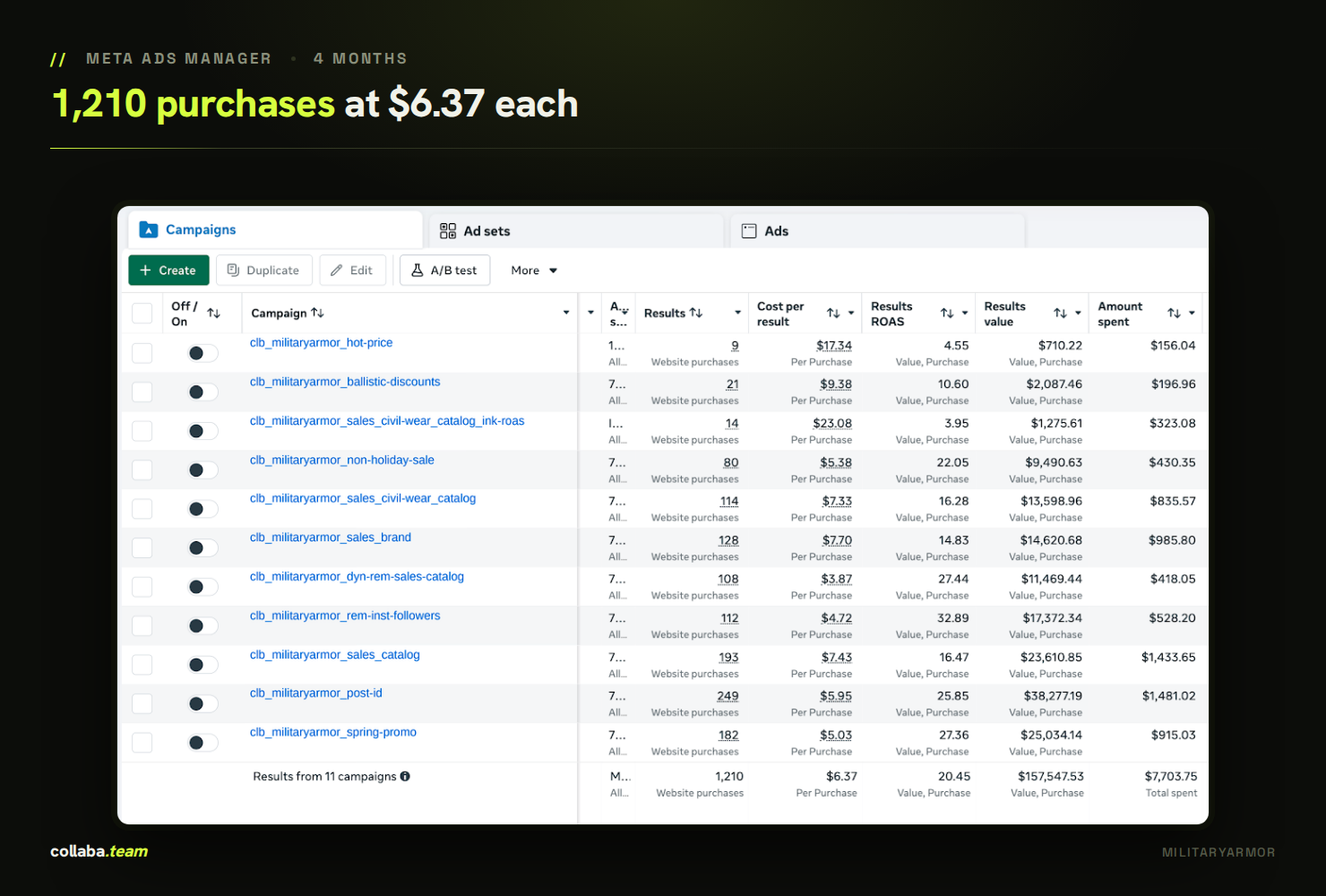
1,210
purchases in 4 months
$6.37
cost per purchase
Sound off — tap a video for sound




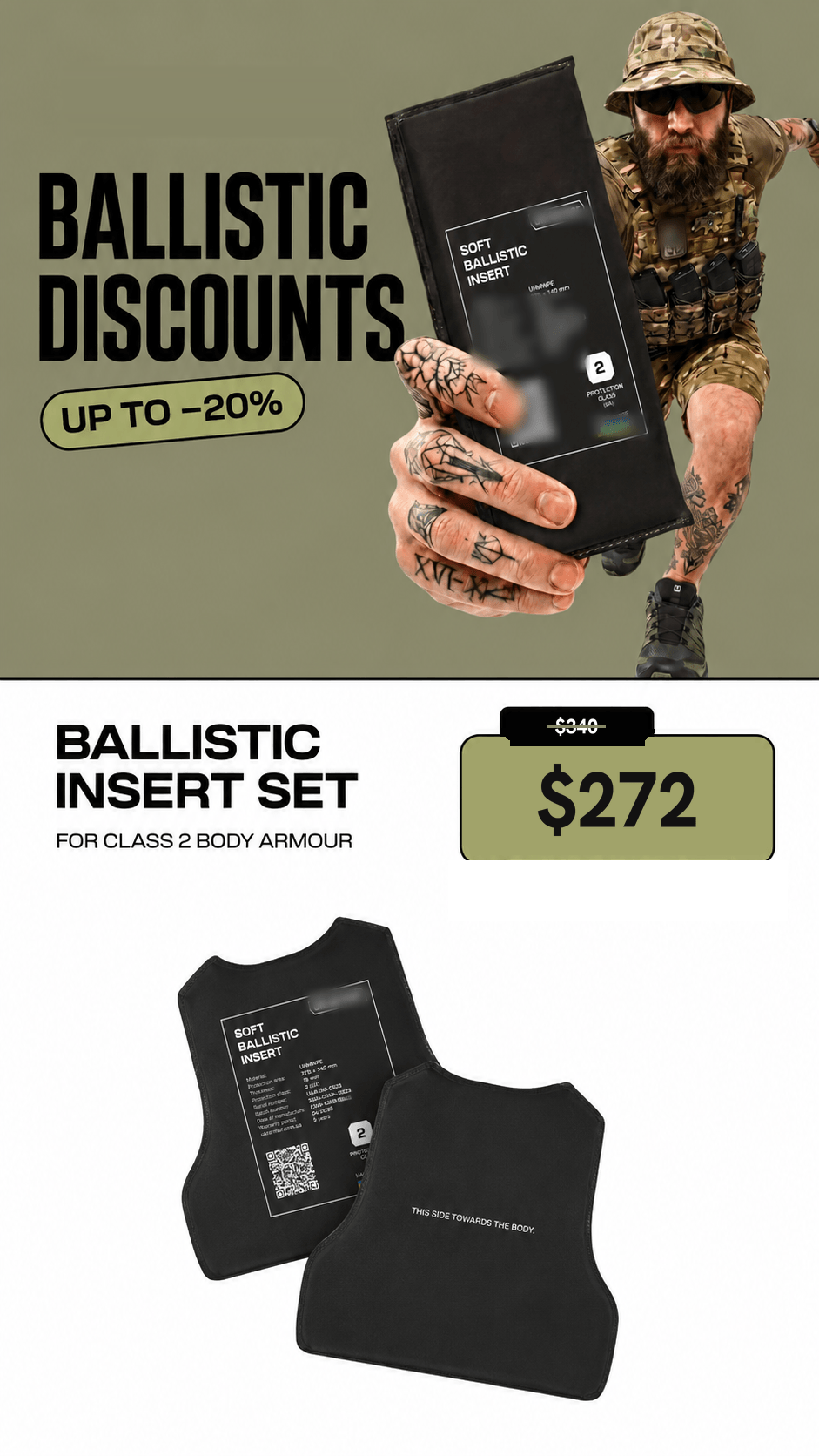
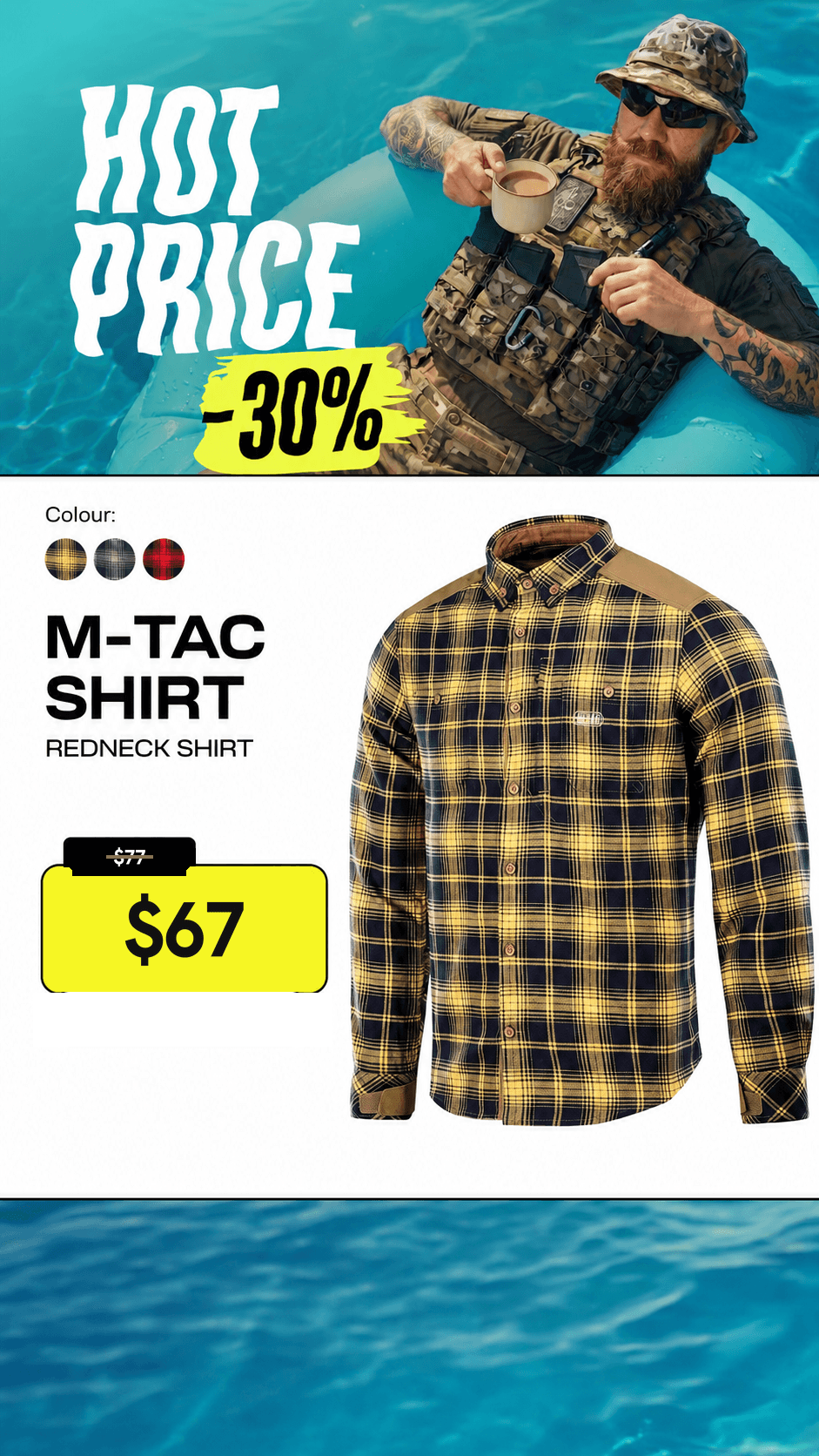
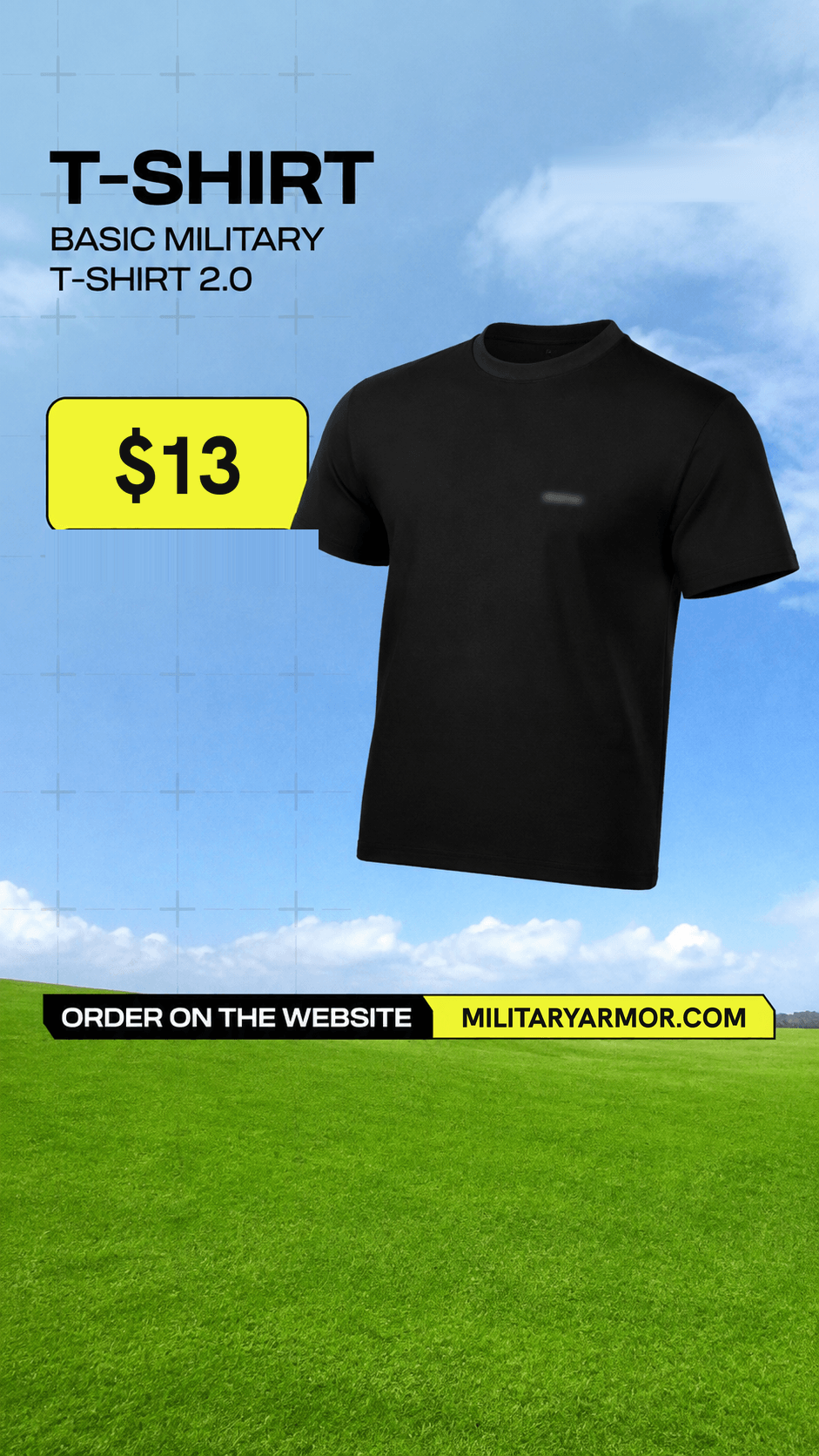
The client came to us unhappy with the growth their previous setup was producing. We got no access to the old ad account beyond a read-only look, so everything was rebuilt: account, pixel, Conversions API, product catalog, campaign structure. The audit of what had been running explained the flat numbers. One audience carried everything — 18–65, men and women together, no separation between issue equipment and civilian tactical wear. Winter apparel was still being pushed in spring. Creative testing barely existed: one creative and one angle per campaign, no catalog testing. Everything ran on the conversion objective, with nothing feeding the top of the funnel. Server-side tracking covered Purchase and nothing else, so the algorithm learned from a single bottom-of-funnel event. And there was no geo layer at all, in a market where a large share of the buyers sit in a small number of very predictable locations. On top of that the client measured us on incremental ROAS with a floor of 3 — a materially harder bar than the in-platform ROAS most accounts are judged on.
0
Rebuilt the account from zero: a new ad account, a new pixel and Conversions API carrying the full event chain instead of Purchase alone, and a product catalog structured the way the store actually sells, so the algorithm had something to learn from before the first dollar was spent.
0
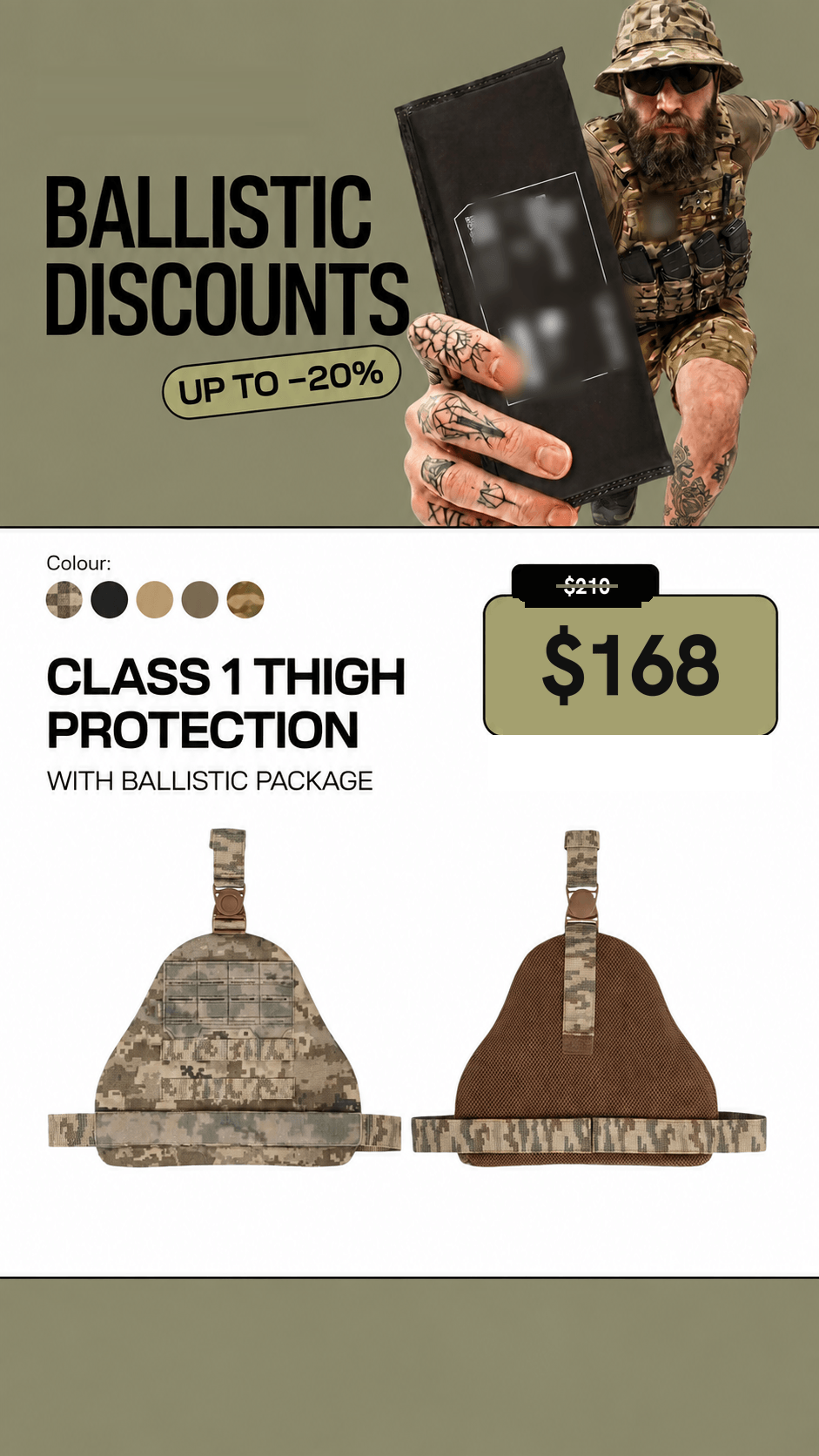
Split the catalog into campaign-sized units: protective equipment such as plates, helmets, chest rigs, pouches, eyewear and active hearing protection was separated from apparel, and apparel was split into above-waist, below-waist, headwear and footwear, so budget followed real demand per category instead of one blended feed.
0
Ran the seasonal handover on purpose: we came in at the end of the cold season, cleared winter stock and rotated into demi-season and summer using last year’s seasonal demand data, which put combat shirts and CoolMax tees on top the moment the weather turned.
0
Built a layered remarketing engine: dynamic remarketing matched product IDs on the site to catalog IDs so browsers and cart abandoners saw the exact items they had looked at, Instagram post-ID ads carried organic proof into paid with product sets attached, and separate campaigns pushed the client’s own production alongside their strongest partner brands.
0
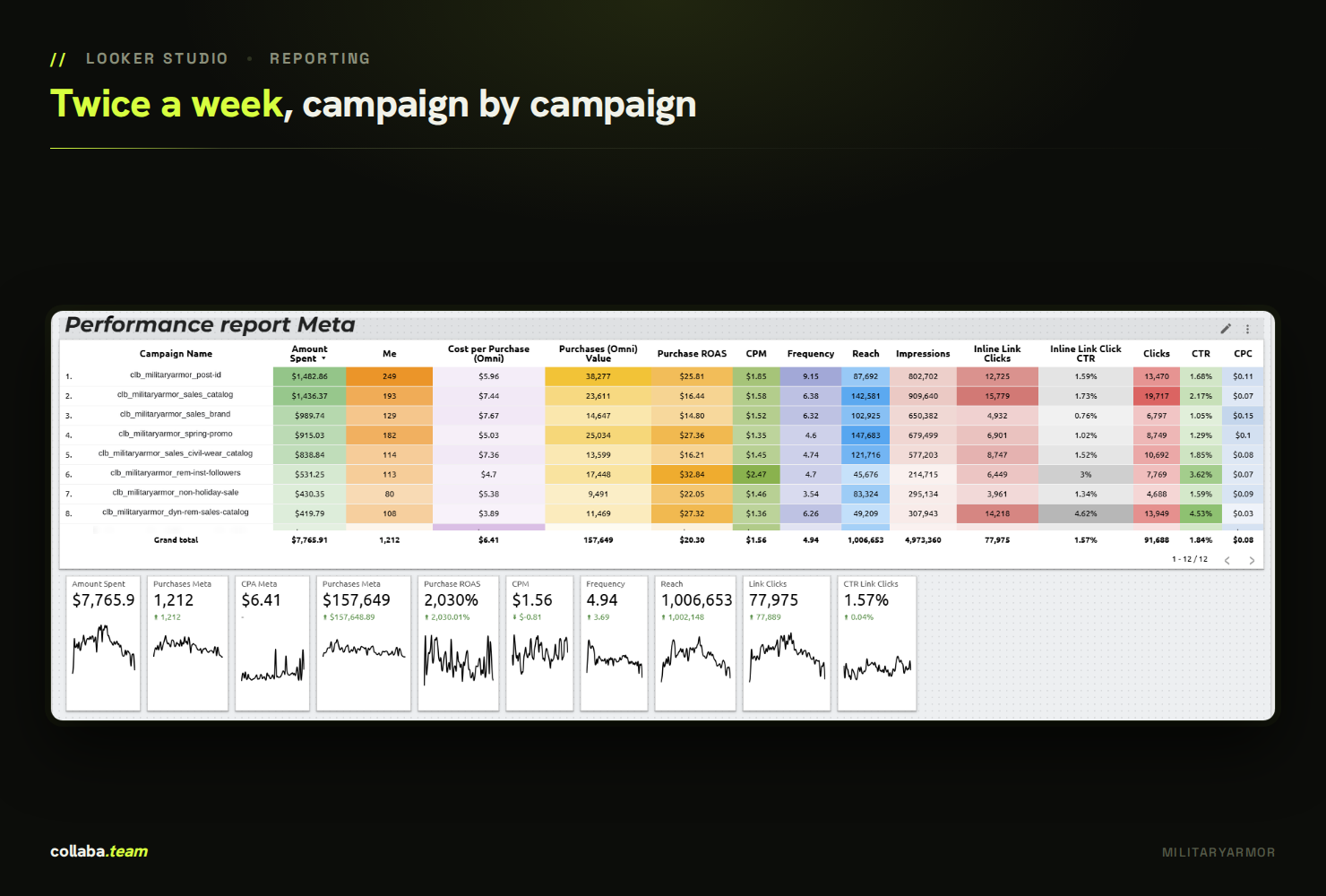
Put the budget where the incrementality was: promo, post-ID and dynamic-remarketing campaigns took the largest share because they consistently produced the highest incremental lift, the rest split roughly evenly, new campaigns went live weekly, reporting ran twice a week, and next month’s budget was planned and locked with the client before it started.
0
Tested a female audience once and stopped there: the hypothesis did not confirm, so we kept the budget on men rather than spending into it.

Dmytro Isaiev
Media Buyer, collaba.team
“The lesson here is about the metric, not the campaigns. The client wanted incremental ROAS above 3 and we finished at 5.56 — but incremental attribution is a model, and Meta says so itself. We were optimizing toward an estimate produced by the same platform we were being judged on.
Next time I would push much harder at the start for an independent tracker that arbitrates on real orders from the CRM, so nobody has to take either Meta’s or Google’s word for it.”

— Rosty C
Founder, collaba.team
“We also ran a store-visit campaign from a separate account: radius targeting around the physical store, and anyone who taps gets directions to the nearest location. It is a genuinely strong format for retail with offline points — a chain with 300 stores can run one ad per store. But to prove it you need a footfall counter and a baseline of average weekly visits before launch, and that was not in place here, so the test finished without numbers.”
The structure did the work here: a catalog split the way the store sells, remarketing matched to real product IDs, budget following incremental lift. It produced 5.56 incremental ROAS against a target of 3. But the number everyone steered by was still generated by the channel being measured, and if the KPI is going to be incremental, the arbiter should sit outside the channel — a tracker reading real orders from the CRM, not the platform grading its own homework.
Choco Yummy
6.3x
ROAS over the last 6 months
→
Ready to scale your paid social?
Send a short brief — we'll come back within one business day with first hypotheses and a call slot.
Kyiv, Ukraine · worldwide clients
What kind of business are you growing?
We typically work with businesses generating over $25,000 per month — does your brand qualify?
What do you need most right now?
Where do we send the plan?
Only latin letters, spaces, ' and - are allowed (min 2 letters) Please enter a valid email (latin characters only)Preferred way to contact you — pick any
Please pick at least one contact methodSounds like we're not the right fit — yet
We take on projects from $25k/month in revenue so our fee pays for itself. Meanwhile — our growth notes are free, and when you hit that mark, write us: rosty@collaba.team
Thanks — got it ✓
Book your free strategy call right now: